Showing posts with label music reviews. Show all posts

Tuesday, November 5, 2013

1990's JONI MITCHELL- NIGHT RIDE HOME


'Because Elvis gave them cars
You think I'm cheap...'
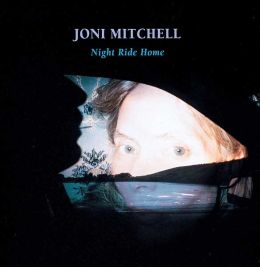


                                              Night Ride Home
 
I DISCOVERED Joni Mitchell late, at an unfortunate time. It was in the early 80’s and the 80’s wasn’t, in my opinion- others will differ- a kind decade for her. The 70’s were, alternatively, a glorious time. It culminated in the more experimental records like ‘Mingus’ and ‘Don Juan’s Reckless Daughter’ which were triumphs of courage as much as anything. She knew, and the record producers were telling her, that she would lose a lot of her loyal ‘Court and Spark’ and ‘Hejira’ fans, simply because these albums were risky and breathtakingly different. Perhaps the 80’s albums were different too, but I have never been able to get into them. They include ‘Dog Eat Dog’ and ‘Chalk Mark in the Rainstorm.’ I suppose Joni Mitchell’s career threatened to suddenly end then. A great period from the late 60’s, when she began, and a brilliant decade throughout the 70’s, and then music oblivion. This would be different to her contemporaries, like Van Morrison, who, in my opinion, had a decade in the 80’s very much as successful and creative and full of wonder as the 70’s.
Thankfully, there were three excellent records created by Joni in the 90’s, as a kind of comeback from unsuccessful 80’s experimentation. The first of these, ‘Night Ride Home’, from 1991, has been on my record player a lot lately, as I sit at the long table in the kitchen, or the leather couch in front of the stereo. I find myself humming the tunes all the time, and thinking about them, lyrically especially, as lyrically is probably all I can do. Don’t expect me to be discussing harmonic palettes, or dominant and non-dominant chords, for that matter.
‘Night Ride Home’ has ten songs, and is quietly inspired. It is produced by Joni and her then husband, bassist Larry Klein, and guest artists include Michael Landau and Wayne Shorter. The first song, the title track, is a relaxed and lovely paean to a simple night drive next to the person you love. The chorus features the simple refrain: ‘I love the man beside me/ We love the open road.’ It is the 4th of July holiday and the couple have been on the road, escaping from the madness of being weighed down by phones-‘No phones till Friday’- which is reminiscent of ‘Court and Spark’s song ‘The Same Situation’ where the speaker is ‘tethered to a ringing telephone.’ The imagery is smooth, and relaxed, and lovely, as the poet recalls the various highlights of their trip away- the surreal ‘big blue moon’, the fireworks and ‘the ukulele man’, the way the powerlines gleam silver from the beams from the headlights, and (my favourite image), the majestic and mysterious ‘big dark horse’: ‘Red taillights on his side/ Is keeping right alongside/ Rev for stride.’ This is the most gentle and assured of all the songs on the album, with its absence of any noticeable tension. There are even soft, sibilant sounds of chirping crickets on the soundtrack. It is a mature couple’s celebration of peace and fulfilment.
Several tracks later ‘Nothing Can Be Done’ appears, and with it all the tensions that can exist in relationships. Joni shares the vocals with somebody with a young, strong voice called David Baerwald. The lovely surreal blue moon has been replaced bed as being y ‘graffiti ruins.’ A tender and loving heart is now described as ‘a smoking gun.’ The speaker’s lover suddenly leaves in anger, running red lights, accompanied by ‘trash-can-rock-band-pounding.’ Middle age is uncertainty is creeping in- ‘Oh I am not old/ I’m told/ But I am not young/ Oh and nothing can be done.’ This song has a harder edge, the male vocal emphasising a certain kind of moodiness and soft aggression. A part of it seems to be about regret. The words are quite simple, but the arrangement is interesting with the layered vocals and heavy percussion.
‘Ray’s Dad’s Cadillac’ is probably the weakest song, but it’s fun, and a return to the lightness of mood. It is the second last song on the album and has a catchy refrain, based around its title. There are a couple of songs on this album that conjure up the past. Here, the singer sings of her rock ‘n’ roll days, of romance in the back of the Cadillac, and the ‘pink fins’ of the car ‘in the falling rain.’ Ray’s dad, it seems, is her ‘math’ teacher and she is no good at math. Her mind is on other things, rather than school. She wants to escape. She dreams of ‘blue runways’ and ‘Blue lights out on airport road’ and the bolts and ‘tire treads’ of low planes. For Joni, the past is often about romance, and music, and dreams of escape- an ‘urge for going’ which she often explored.
The past, and boys, and romance comes up again in the longest song, the charming ‘Come in From the Cold.’ In ‘Turbulent Indigo’, recorded a few years later, and one of Joni’s best records, she sang and wrote mostly about contemporary issues, like domestic violence and natural justice. On ‘Night Ride Home’ Joni is still singing about the past and reminiscing about rock ‘n’ roll and her youth when she was discovering new things. This song, ‘Come in From the Cold’ is an excellent example.
The listener is transported back to 1957 where potential young lovers were kept ‘a foot apart’ at dances by adults holding rulers ‘without a heart.’ These ‘wise guardians’ were unable to prevent the occasional touch of a fingertip, or legs touching under the table, and the sensation of experiencing something innocent but still forbidden is captured beautifully by Joni when she sings of contact with another making ‘our circuitry explode’ and how she feels ‘renewed’ and ‘disabled’ by these ‘bonfires in my spine.’ In ‘Down To You’ from ‘Court and Spark’ the touch starved adult is startled by the close proximity of another: ‘In the morning there are lovers in the street/ They look so high/ You brush against a stranger/ And you both apologize…’, however this experience is different. It’s all about innocence and new experiences, and finding your way and discovering who you are. There is an echo of Van Gogh (like there is on ‘Turbulent Indigo’), when Joni talks of being ‘flesh and blood’, and ‘not some stone commission/ Like some statue in the park.’ Van Gogh wrote to his brother Theo with similar complaints about his desperate need for affection and intimacy from another human being. There is also something cerebral about the whole thing as well. Amidst tactile images about wanting to make physical connections, Joni sings of what was on her mind and the thoughts that dwelt in a 1957 mind: ‘We really thought we had a purpose/ We were so anxious to achieve/ We had hope/ The world had promise/ For a slave/ To liberty.’
Next there is a reality check on the album when the listener is taken away from the idealism of the past into the rude awakening of the present. I have read somewhere that Joni had a housekeeper that ripped her off and even tried to sue her, and ‘The Windfall (Everything for Nothing) clearly comes out of that. The song is bitter and accusing, even if it is saved from a morbid vengefulness with the humour in its opening lines:  ‘Because Elvis gave them cars/ You think I’m cheap / And you’re hard done by.’ There is a lovely lilting sing-song sound in its melody that also belies the acrimony on display, in lines that are spat out like ‘Oh I’m tangled in your lines/ Your scam/ Your spider web/ Spit spun between the trees/ Doors slam/ You want my head/ You’d eat your young alive/ For a Jaguar in the drive…’
If we believe the lyrics, the housekeeper was a rapacious parasite, and Joni meanwhile looked after her generously and fairly throughout, paying for trips to ‘tropic shores’ and allowing her access to a ‘big blue pool’ and ‘clothes from fancy stores.’ The song becomes a rant against justice and the judicial system of lawyers and in the end it’s a very nicely constructed song and very musical, but also deeply personal with the feel of wanting to get things off your chest.
Much more universal is the charming ‘The Only Joy in Town’, set in Rome, and one of dozens of songs, no doubt, about becoming besotted, as a tourist, by a charismatic figure wandering around a foreign town. Joni gives a convincing female heterosexual slant on things by referring to the wonder boy throughout as the alliterative ‘Botticelli black boy’, a boy that is mesmerizing and lovely but full of self-conceit as he is ‘Breathing in women like oxygen/ On the Spanish stairs.’ I’ve sat on the Spanish stairs and I can easily see just how Joni’s intense and sexual image can be played out, on the first day of Spring, no less. She recreates the place names, and the atmosphere of Rome, with references to ‘Deadpan side-walk vendors’ and ‘Fellini’s circus’ and ‘La Dolce Vita clowns.’ There is a lovely melancholy edge to the whole song, however, with its reference to the empty streets at night- ‘Where does everybody go’, and the fact that, by 1991, the idea of following some charismatic boy around seems ridiculous: ‘In my youth I would have followed him/ All through this terra-cotta town.’ Sadly, he is the ‘only joy in town’, and he is unattainable.
Equally unattainable, it seems, is the mysterious figure from the last song, ‘Two Grey Rooms.’  This song took a while to grow on me, musically, at any rate. But for a long time I have now considered it to be the best song. It, too, is full of melancholy, as the title suggests, an echo of the melancholy book ‘Death in Venice.’  The singer is living in an undisclosed location and is besotted by another figure, this time a man, older, it seems, than the ‘Botticelli black boy.’ The image this time is of masculinity and sexuality: ‘Hot days your shirt’s undone/ Rainy days you run/ Oh and then you fade so fast/ Below my window.’ It’s the story of an infatuated voyeur, and the strings used in the song add a touch of grandeur and a tinge of sadness. This is unrequited love and its painstaking in its obsession. The lyrics also add the idea of it being like some kind of retreat- ‘No one knows I’m here/ One day I just disappeared/ And I took these two grey rooms up here…’  Just to remind us that not all of Joni’s songs are autobiographical, the idea apparently comes from an experience of the German director, Fassbinder, who saw a former lover from his window and became newly hypnotised.
Joni dips into the past again with a beautiful, sad song called ‘Cherokee Louise.’ It seems to be based on her relationship with a childhood friend. Joni’s songs about her childhood past and her young friendships are some of her most haunting. I am thinking of songs like ‘Song For Sharon’ and ‘Urge For Going’ and ‘Chinese Café’, etc, and this one is as good as these. ‘Cherokee Louise’ tells the sad story of a girl running away from her sexually abusive stepfather and hiding in a tunnel ‘in the Broadway bridge.’ It is also a song about ignorance and being ostracized. The poor girl isn’t allowed into the speaker’s house, and gossip and innuendo inflict their usual damage: ‘People like to talk/ Tongues are waggin’ over fences/ Waggin’ over phones…’ Joni contrasts the cruel adult treatment of Cherokee Louise with her own innocent games with the poor victim: ‘Last year about this time/ We used to climb up in the branches/ Just to sway there in some breeze/ Now the cops on the street/ They want Cherokee Louise.’  This song, in its sense of social satire, is reminiscent of certain songs on ‘Dog Eat Dog’, and foreshadows themes that appear on ‘Turbulent Indigo’, such as ‘Not To Blame’, also about assault. The masked sweetness of the song is punctuated by the lovely bursts of soprano sax from Wayne Shorter.
The last two songs up for discussion are, lyrically, the most challenging. The lyrics for one of them- ‘Slouching Towards Bethlehem’, belong to W B Yeats, not Joni.
Joni is generally cynical about Catholicism- see ‘Shine’ on the album of that name, and ‘The Magdalene Laundries’ on ‘Turbulent Indigo’- these are two examples- and my feeling is that she is probably cynical about religion in general, but I might be wrong about this- at least organised, established religions at any rate. Her most beautiful realisation of religious themes in music is ‘The Sire of Sorrow’ from Turbulent indigo, where she puts herself (as far as I can tell) in Job’s harrowing position. This religious motif is repeated on this album on the  triumphant ‘Passion Play (When All the Slaves Are Free’). The lyrics are, apparently, an echo from Luke, discussing an encounter a tax collector made with Jesus, when Jesus unexpectedly admitted him into his home. The tax collector’s name was Zacchaeus and he wanted to be seen by Jesus, who was travelling through Jericho, and being short, decided to climb a sycamore tree to enable this to occur. Joni’s words seem to talk of this encounter: ‘I am up a sycamore/ Looking through the leaves/ A sinner of some position/ who in the world can this heart healer be/ This magical physician.’ Then there are perhaps more contemporary references about ‘dirty work’ and slaves, and Mary Magdalene makes an appearance, and somehow Joni weaves thoughts on Exxon Blue into her tapestry. It all makes for a complex but very tuneful song. And a very confident song.
The only song on the album that doesn’t feature Joni’s words is the Yeat’s poem, ‘The Second Coming’, which Joni gives the title ‘Slouching Towards Bethlehem’ (I’m sure it’s no coincidence that Joan Didion wrote a book with the same title in 1968 about San Francisco). The song, and poem, begin with ‘Turning and turning/ Within the widening gyre/ The falcon cannot hear the falconer/ Things fall apart/ The center cannot hold/ And a blood dimmed tide/ Is loosed upon the world.’
Yeats wrote his poem just after the end of the First War. It clearly still has relevance today. Joni felt, no doubt, that the falcon still could not hear the falconer. It’s not an optimistic song, but there is plenty on ‘Night Ride Home’, including the title track, to counteract any gloomy mood.


Monday, December 17, 2012

The view of the street from your window pane


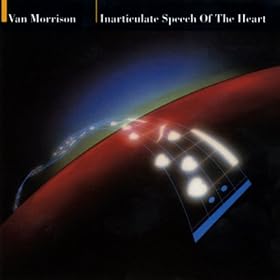
VAN MORRISON’S highly underrated record of the early 80’s, ‘INARTICULATE SPEECH OF THE HEART’ featured a catchy tune called ‘The Street Only Knew Your Name.’ In the song Van sings about the streets of his childhood, a theme he eludes to time and time again. We can deduce a lot from his time growing up in Orangefield, East Belfast, from this particular song:
 

'Your street, rich street or poor
Used to always be sure, on your street
There's a place in your heart and you know from the start
Can't be complete outside of the street
Keep moving on through the joy and the pain
Sometimes you got to look back to the street again
Would you prefer all those castles in Spain
Or the view of the street from your window pane
And you walked around in the heart of town
Listening for that sound
And the street only knew your name
Well the street only knew your name, your name.'


 It makes me think about my own past, my suburb and street in particular, and the house which my parents still inhabit, who knows for how much longer. The house is in a bit of disrepair, and the backyard is largish. A good recipe for future flats.

 
Chauvel Street, Reservoir, is a reasonably long street with ordinary suburban houses on either side. My parent’s house is next to the corner at the northern end. The road is not too busy, so we could play tennis on the road many years ago. Also football games where the goals were the space between the gap in the front fence at the top of the driveway. There was also chalked-in hopscotch if I recall correctly, outside the front fence, pre-teen.


There were families on all sides and around the corner. My gang, growing up, played cricket in the summer diagonally opposite on the corner across the road, where Chauvel Street ends in a ‘T’. None of us were very good, although I considered myself excellent at the forward defensive block. Most of the time it was amicable, but Wayne had his moments. He was a bit older than the rest of us, but not quite an adult. Unemployed, he drank quite a lot, Coke especially, wore a ‘Far Canal’ t-shirt that made our eyes pop out of our heads, and even had tattoos (way before trendy women got them). He also had his own Stuart Surridge cricket bat. We only had one bat at this time. We were supposed to run with it after a single, and hand it to our partner to face the next ball. However, I continually forgot, and would drop the bat after I took off like a hare for the single. Wayne would tolerate it a couple of times, but by the third time he completely lost his temper after having said, twice, “don’t drop the bat!!!” He marched aggressively to the middle of the wicket, grabbed the bat, and stormed over to the nearest telegraph pole. Here he smashed his precious bat into several pieces, splinters flying everywhere, announcing with venom “right, now no-one’s going to play!” This is just one memory of Wayne. Most of the time I was in a kind of awe of him, and felt a certain gratification every time he spoke to me, even though I knew I didn’t want to turn out like him.


I felt very differently about little sister Leanne.  I say ‘little’, although she was slightly older than me, and freckled and probably quite plain, but I found her enchanting all the same. Looking back I think I sort of fell in love with her, from the ages of about eight to thirteen, if that’s possible, when we were close.

 
The sibling I saw the most of was Craig, the youngest in the family, but not much younger than me. Craig looked up to me for my supposed academic ability (I went to the high, he went to the Tech), and I liked him for his sturdy character, his mischievousness, and above all because he was happy and uncomplicated.


That wasn’t all of the ‘A’ family. An older sibling with glasses I had little to do with, and two parents that did fix themselves firmly in my mind. Mrs A was a stay at home mother, unhappy, suffering, struggling, but always polite. Her husband was a plumber whose life, it seemed, was out of control. He would get home from work late, often roaring drunk, and agitated like an abusive Roddy Doyle character, and take it out on his poor wife. The language was obscene to my tiny, innocent ears, and I wondered how the children coped. There were times when there was yelling and screaming, and the smashing of plates, whilst Craig and Leanne and I were in the bedroom playing Monopoly. Manic disturbances would erupt from the lounge or the kitchen, meanwhile Craig or Leanne would roll the dice, simultaneous pleasure etched on their faces, as they landed on Mayfair or Park Lane exclaiming “I’ll buy it!” I was bewildered.


So the three diverse and intriguing ‘A’ siblings would lounge about at night and on weekends on the street corner where our beloved bitumen cricket pitch was. Other sons (not daughters) would frequently migrate there, including the Italian boy Luch, whose mother would scream out something about ‘mangiare’ around dinner time every night. I guess my mother must have called me for dinner as well, except sometimes I would sneak out after the rest of the family were in bed. Late at night the ‘A’ clan were still out there. They didn’t seem to be encumbered by rules. I would pretend to go to the toilet. The loud flushing sound would drown out the sound of the key scraping in the back door lock, and I was away, for hours at a time. One time my father also went to the toilet this same night, and must have checked the back door and discovered it was unlocked. I had to go around to my bedroom window at the back of the house. I shared this with my brother whose sleep I disturbed. He promptly woke the whole house. Mother was in a state of semi-rage.


The other pleasant memory in regards to the corner gang was the times when I would be home, engrossed in adolescent reading, and I would stream out the front door in an exalted mood, full of news of the book I had just read, eager to tell my generous, expectant audience. The ‘A’ family didn’t read much, but somehow they found the fact that I did, interesting in some way. One time I specifically remember it was ‘Ten Little Niggers' by Agatha Christie. A tremendous story to re-tell, almost like you were entrapped on the island yourself.


The reading of books was a little one-sided, but we were all music enthusiasts. It was Suzi Quatro V Melanie, and I was hopelessly outnumbered. ’48 Crash’ seemed brash and discordant to me, much preferring the lyrical softness of ‘Little Bit Of Me.’


I received my first pushbike, a metallic coloured Malvern Star, when I was thirteen. I was an eager frequent flyer around the streets of Reservoir, whizzing by in my brown cords and any number of Miller shirts I owned. I had a little tool kit I never quite mastered, and loved the bold, black tape on the curved handlebars. I once lost my head and rode all the way to Brunswick. I rang my parents pretending I was lost. The real reason I rang was because I wanted them to share my awe of riding as far as Brunswick. The fastest I rode was down the hill on Rosenthal Crescent, from the massive roundabout that connects Hughes Parade. Reckless and dangerous, a kind of bungy jumping of its time. Nowadays I would be second guessing emerging cars.


The only shops in the vicinity of Chauvel Street were (and still are) the ones in Gellibrand Crescent. The shops there have changed so much over time. There was a fish’n’ chip shop way back when, two rival milk bars, and a service station on the corner block which is now a kindergarten. Each little shop featured its own little intrigue. The first milk bar was my preferred one. Craig and Leanne and I used to buy a bottle of milk and ask the shopkeeper to open it and pour some flavoured topping into it. We had an early and delicious version of ‘Big M’ before ‘Big M’ even came out. We also gorged ourselves on lollies, icy poles and football cards. Sunnyboys were a favourite. Sometimes, like a mild version of the lucky ticket in ‘Willy Wonka and the Chocolate Factory’, there would be gold writing inside the Sunnyboy telling you that you had won a free one. They were very generous with their give-aways in those days.


I loved being out on the streets. I felt free and the conversations were always buzzing. It all ended, for me, when I got to about Year 11. I had my first girlfriend then, living in a completely different part of Reservoir. She and I were inseparable, and I forgot all about the Luch and the ‘A’ family. I guess they survived without me.


Friday, November 9, 2012

Romanticising Melanie


MELANIE


VAN Morrison begins his moving and meditative 1986 album ‘No Guru, No Method, No Teacher’ with a song that typifies his compulsion to relive the past:

‘When I was a young boy back in Orangefield,

I used to gaze out my classroom window and dream

Then go home and listen to Ray sing

“I Believed In My Soul” after school.’

Lately I have been doing the same. Except not with Ray Charles, who is still a fairly much undiscovered pleasure, and not even with Van, who I didn’t really get to know until university with ‘Moondance.’ When I was a young boy dreaming about music in my classroom and looking out the window, it was Melanie Safka I was thinking about.

No doubt Van would have been listening to Ray Charles on an old record player, or perhaps tuning into Radio Luxembourg. For me, now in 2012, too dreamy and tired to think about reading, and totally disinterested in TV, I have been watching Melanie on youtube. The headphones of yesteryear have been replaced by a skinny white set of earplugs courtesy of Apple. And there is a whole magical wonderland of not just music, but images of Melanie and live recordings to go with it. The visual becomes just as significant and enjoyable as the aural.

So I have rediscovered the music that is still in my bones. Her charismatic and original voice stirs me as much as it used to. It soothes and is of great comfort. Perhaps it reminds me of less complicated days. Songs half- forgotten like WE DON’T KNOW WHERE WE’RE GOING and STOP I DON’T WANNA HEAR IT ANYMORE stir in me a soft and seductive melancholy. I learn for probably the first time that they are on a soundtrack to a Stanley Kramer film called ‘RPM.’ The languid song JIGSAW PUZZLE is another that’s half-forgotten, but the images are familiar- the world of outcasts and tramps, and even a ‘methylated sandwich.’  And there it is- it is originally a Rolling Stones song on ‘Beggar’s Banquet’- I’m not sure I ever knew that. Again, it is news to me that she sang another Stones song, WILD HORSES, and that there’s even a Randy Newman cover called I THINK ITS GOING TO RAIN TODAY.

I can hear all of my favourite Melanie record- STONEGROUND WORDS- on youtube. Miraculously, it is a recording of the album, with its familiar tiny screeches and scratches:

‘I'll go to the garden that follows the seasons
Live in the field where the healing grass grows
Go to the mountains where air's clear for breathing
Clear is just another way to see
I feel to know.’

Melanie is there live singing ‘Chords of Fame’ at Montreux (so is the original Phil Och’s version which seems to me to have very little of the soul that her version has).  She appears on various ‘Tonight’ programmes- the ubiquitous Johnny Carson and Johnny Cash; variously talking about Woodstock; after her comeback from having children circa 1974; and appearing during my favourite Melanie phase in 1972 singing ‘DO YOU BELIEVE’:

‘Do you believe it's morning
I'm alive but that's the last thing on my mind
If our night
time words mean good-bye
Let our morning words be kind
Didn't your eyes say you'd never change your mind
Didn't my eyes say I do believe your eyes
I do believe them, I do believe your eyes.’


Another great feature of youtube is that you can read what other people have said about the song and clip you have just listened to. It makes you feel a part of something. Seemingly it’s not just you in the lounge room with your senses awake and your eyes closed. You have shared this experience with hundreds or thousands of people worldwide. And Melanie comments are never sleazy or idiotic. It tells you that you are on to a good thing.


Sunday, September 2, 2012

ON HAL DAVID, BRIEFLY

HAL DAVID has reportedly died, just yesterday. This morning, in the new September sunshine, I sang and whistled my two favourite Burt Bacharach/ Hal David songs on the way to work. They are THE LOOK OF LOVE (Dusty Springfield) and THIS GUY"S IN LOVE WITH YOU (Herb Alpert), both realised within a year of each other towards the end of the 6o's.

This one contains the lovely lines:

'My hands are shakin' don't let my heart keep breaking 'cause


I need your love, I want your love

Say you're in love and you'll be my guy, if not I'll just die.'


Try not to be too distracted by this clip, from 'Casino Royale'. I have included it because it features Ursula Andress, who is apparently the inspiration for this song. Clearly, she has 'the look of love.' I have always felt that Marilyn Monroe did too, especially around the time she married Joe Di Maggio. The clip also includes the lovers wandering by a large fish tank, a much more romantic couple than the two frauds in baz Luhrmann's 'Romeo and Juliet'!

Thursday, June 21, 2012

PAUL MCCARTNEY TURNED 70 THE OTHER DAY


GEORGE Harrison was probably my favourite Beatle when I first properly discovered the Beatles when I was in Year 10 at school. It might have been his surname, or the intriguing character that I envisaged. He seemed to be a bit more complicated than the others, with his advanced guitar playing and passion for the sitar.

Then, when I listened to the music with a more concentrated ear, it became John Lennon. The first time I ever wrote a serious diary entry was in December, 1980, when John Lennon was murdered. It happened in Melbourne mid-afternoon on a warm to hot day, a typical summer’s day. I was splashing in a pool with friends at a house about five blocks from where I grew up. I especially liked Linda and I was splashing her the most, when someone came outside to tell me that Lennon had been shot. I crawled out of the pool and sat by the radio, until his death was confirmed ten minutes later. I went home, sorrowfully, and wrote.

Even now I think that Lennon was probably the most talented member of the band. That is, his words and music are, for me, consistently more interesting and creative and more accomplished than the others. But Paul McCartney had his moments- plenty of them- and he only weakens in comparison to Lennon, but gifted in his own right. I guess it is a bit like saying Van Gogh was a better painter than Gauguin- but Gauguin was still an extraordinary painter!

I don’t know much about these things, but I’m told by a bass player friend that McCartney is an extraordinary bassist. We have to remember that all the great Lennon songs in the early days, like ‘Rain’ and ‘Girl’ and‘In My Life’ still had a generous helping hand by Paul which made them even better.

And then there are Paul’s own songs. There are those that are light and whimsical and probably don’t mean much, and would have infuriated John Lennon, and these I can’t be bothered with these days. I am thinking here of Desmond with his barrow in the marketplace, and the one about feeling the need to get up and dance to a song that was a hit before your mother was born, and the one where Rose and Valerie are screaming from the gallery and even the one which has Vera, Chuck and Dave sitting on their grandparent’s knee.

But when I think about the greatness in Paul McCartney, these songs are easier to find. And instantly recognizable. During his time with The Beatles, I never tire of 'Mother Nature's Son', 'I've Got A Feeling', 'Let It Be', 'Golden Slumbers', 'Here, There and Everywhere', the list goes on.
So I thank him for these songs and many others, and the joy in many of his solo/ Wings songs- great fun, probably drove John Lennon crazy, but nothing better than in the kitchen or in the car listening to great melodies about uncomplicated fun- see 'Jet', 'The Back Seat of my Car', and 'With a Little Luck' for a few examples.
And like great singers he is enigmatic too- like Jim Morrison, you could look at him all day. Watching 'Hey Jude' from the David Frost show countless times.

Wednesday, April 18, 2012

Cold Chisel - Cheap Wine (1980)


THE GUARDIAN, in its music section, had a really nice tribute to Cold Chisel recently, including an original clip of 'Cheap Wine.' I always liked the band, and the song, when I was growing up, but I wasn't crazy about it like some people, and even then I preferred to listen to The Doors and The Beatles, etc. But seeing the film clip again I found it quite charming and a little bit mesmerizing, appreciating it more this time. The article talks about how Cold Chisel were more than just a pub band- articulate songs and songs that were about meaningful things. So I played the clip a few times the other day, not remembering having seen it before. And then, today, I heard it on the bus, drifting in and out, battling with the bus chatter and the sounds of the gears. And it's been in my head all morning. And, appearing in The Guardian, I wonder if it is revolving around in the mind of some English chap or English gal as they cross busy Piccadilly Circus or even David Cameron as he is driven down Whitehall on his way to 10 Downing Street, or the Queen, tinkering with her jewellery, inside Buckingham Palace, Nick Cave sitting in his studio at his piano in Hove near Brighton, Mike Leigh planning and plotting in his favorite cafe in Soho, the proprietor of the fabulous Ulysses bookshop thumbing his way through a first edition of Mrs Dalloway in Museum Street in London, a dancer flexing her muscles inside the Royal Ballet school in Covent Garden, etc, I could go on doing this forever.

The Guardian, April 6, by Russell Cunningham (edited):

Cold Chisel started out as pub rockers, but that workaday sobriquet sells them short – they're no small beer. Formidable and, at least as younger men, volatile on stage, their reputation was also forged with articulate songs touching on charged issues such as abortion and civil strife, and delivered with whip snare, searing guitar and soaring voice. They've filled arenas, not just bars, so by all means call them rockers, hard rockers even, but "pub rockers" plays them down.
They were formed in Adelaide in 1973 but by 1977 their stomping ground was Sydney. The city's streets, particularly Kings Cross and the inner east, bled into the lyrics of laureate keyboardist Don Walker and portrayed a band not so much of the land as the asphalt. This sense of place in their songs made Cold Chisel seem knowable and worth knowing. To the suburban youth who revered them they were like mates, hitting the town with you on a Saturday night and knowing where to lose the hangover on Sunday morning, and in their strident fashion showed many a disaffected teenager it was OK to rail at the world so long as you could laugh at it, too.


I remember buying Chisel albums with uncool glee. I remember cradling home their third, East, in 1980 and unleashing its bonfire blues on my parents' sitting-room stereo. It's a compelling album, raw but deceptively well reined, with Cheap Wine the toast of 12 fizzing tracks. East spent a year in the Australian charts and was the only Chisel album to enter the US Billboard 200, even though a superior studio effort followed with Circus Animals two years later.


   The cover of EAST, June 1980
.

Sunday, March 4, 2012

Bits....

I FINALLY saw ‘Hidden’ (French ‘Cache’) the other day. Great French actors- Daniel Auteuil and Juliette Binoche, and great director- Michael Haneke. The film reminded me of 'The White Ribbon' in ways, although it was less grand, less epic in stature. Still, that really good idea that interests the director- it doesn’t really matter who it is committing the crimes, it is the idea of them being committed in the first place, and the reactions to the people that are being violated- these are the most important things- very unlike Hollywood and Agatha Christie, in this regard.


Haneke was commenting on the French psyche, elements of French history, and the way in which exterior events can turn the world of middle class families upside down. Something as simple as a video recording of the front of your house- left on your doorstep and running for two hours- is enough to make you scared, jumpy. When another video recording leads you back to a murky and uncomfortable incident from your childhood, then you really start asking questions, of yourself and in particular your past motives and actions.

David Stratton once said in a review of this film that you should see the film twice. I can understand that, because I missed something crucial at the end, in the film’s closing several minutes. It occurs on the steps of a school just before the end credits close in, and it’s telling, I think.

‘Hidden’ is a great title for the film- there are many layers to the ideas of ‘hidden’, including commentary on the main couple’s marriage. It reminded me of Hitchcock- I think the director owes a great debt to him- even though we don’t get the neatly tied up ending. Daniel Auteuil reminded me a lot of Gabriel Byrne, especially Gabriel Byrne in the role he plays in ‘Jindabyne.’ I could see the ‘Jindabyne’ role in this film- this man would have acted in similar ways.

......................................................................................................................................


OVER the summer we heard a lot of Angus and Julia Stone and their 2010 album, ‘Down The Way.’ It was played in the car constantly. Even S and A really enjoyed parts of it, humming and singing the album’s single and catchiest tune, ‘Big Jet Plane.’ It’s a very commercial album in lots of ways and easy to get to know quickly. There are some strong songs and others are sweet but a bit too sweet- I think the expression is ‘saccharine’, or sentimental. Some people would find a lack of variance in the tone of each song frustrating. Others would say the songs aren’t demanding enough and are easily forgotten. I think there is some truth in this. Julia Stone sometimes inhabits a little teeny-weeny voice which can be annoying. I think Angus Stone is the stronger singer/ writer of the two. There is more variation in his work, it seems more multi-layered. Both seem to have trouble really letting go. None of the songs are belted out- I know it isn’t that sort of record- but sometimes the feeling seems repressed. There is one exception though, in perhaps the album’s strongest song. In the lyric near the end of ‘Draw Your Swords’ he is starting to let go, slightly reminiscent of Paul McCartney on ‘Why Don’t We Do It In The Road’, but at the same time not quite there.

Lyrically the album isn’t terribly much, but the song ‘Santa Monica Dream’ has a nice sense of place:

‘Rob's in the kitchen making pizza

Somewhere down in Battery Park

I'm singing songs about the future

Wondering where you are

I could call you on the telephone

But do I really want to know?

You're making love now to the lady down the road

No I don't, I don't want to know


I'm somewhere, you're somewhere

I'm nowhere, you're nowhere

You're somewhere, you're somewhere

I could go there but I don’t.’


………………………………………………………………………………………

I WENT to Toorak College to see ‘Fireman Sam.’ It is in Mount Eliza, it is huge, incredibly well resourced and costs in its senior years about $20,000 a year. A nice Year 10 student showed me around the VCE section. They have a huge student canteen and an even bigger staff one opposite, a bit more formal looking. I had such mixed feelings here. I could see what a great school it would be for the students- small class sizes and everyone around you intelligent and so on. But I couldn’t stop thinking about all the ordinary people in ordinary schools and how everyone here is probably the same, except for the student who showed me around who is much poorer and is on a scholarship. I haven’t been able to reconcile my feelings about this place at all.


...................................................................................................................................


I am having awful trouble with my left calf. As a result I am riding a bike a lot more. I quite like it, and it can be tiring, but I don’t feel the way I do when I have finished a long run. And I don’t dare allow Van Morrison to blast through the iPod like I do when I’m running.

Wednesday, January 11, 2012

Two impressive personal websites

THE BLUE LANTERN

Arts Journalism for the Love of It
Jane Librizzi
My Photo


EVERY now and then you stumble across a very impressive blog or two whilst trawling the internet during  moments in which you experience rare solitude and freedom. Tonight I have been absorbed for a good hour or two by this blog: www.thebluelantern.blogspot.com The writer is Jane Librizzi, a New Yorker, apparently a freelance journalist and a radio broadcaster, who I wouldn't know from a bar of soap- and yet, becoming absorbed in her thought-provoking blog, you can't help but feel you know her a little. She covers a wide range of subjects, mostly Art and Literature, and she does so comprehensively and professionally with acknowledgement of sources and detailed bibliographies. And you learn so much from her blog- or at least I did- because she covers some really interesting and esoteric subjects. At the moment, in 2012, she seems to be absorbed with Belgian art and Belgian photography. Then there is poetry by an Austrian, Ingeborg Bachmann, a fascinating study of the construction of stairs under the lovely heading 'Evanescence', a discussion of a Paul Signac painting under the equally beguiling heading, 'Luminance', and the professional relationship between Duncan Phillips (patron) and Augustus Vincent Tack (painter). Now I have only gone back in my discussion here to December 3, 2011, and Librizzi has been blogging since September 2005. So she has an incredible wealth of interesting blog entries over a number of years. She also includes a library of books read under a link at the bottom of her page called 'Library Thing.' Here once again I was introduced to the names of many writers and their books totally new to me.


THE other web address that has captured my attention of late has www.artgarfunkel.com Again, a fascinating wealth of information, and great insight into the lesser known of the Simon and Garfunkel coupling.

Art Garfunkel

I have heard quite a lot of Art Garfunkel's solo career, and grew up listening to the 'Breakaway' album with its beautiful, dreamy rendition of 'I Only Have Eyes For You', and the even better 'Watermark' album filled with excellent Jimmy Webb tunes, like 'Mr Shuck 'n' Jive', one of my favourite songs. There is a lyric in Jimmy Webb's 'Wooden Planes' that seems made up and fanciful and dream-like:


Propeller's spinning in the
West Texas wind,
We ran behind
You know we laughed, we thought
our little flight would never end


You were my brother and I,
I knew you were my friend
I wish we
were chasing after wooden
airplanes....once again.

I love the nostagic feel, and it's a lovely song, and to my delight I read an interview with Jimmy Webb in which he talks about how his family did live in West Texas, and furthermore, his father used to buy he and his brother wooden planes to fly in the wind....


 On the Garfunkel website, under the tab 'News', we get just that, with information about recent Art Garfunkel happenings, mentioning of new articles, the poem he read to Paul Simon at the latter's 70th birthday, etc, etc. Under 'the G' for Guest, we get biographical details, an introduction to Art Garfunkel's massive Euro wanderings on foot (including maps of his personal voyages), his acting credits, and most interestingly for me, his favourite 60 songs of all time, from Chuck Berry and Johnny Cash at the lower end, to The Rolling Stones and The Beatles at the top end. Many great songs, and somewhat modestly, 'Bridge Over Troubled Water' at No.4- yet I couldn't help but be disappointed he couldn't find room for anything by Joni Mitchell or Van Morrison. The tab 'Concerts' offers the reader insights into past performances and then there is 'Writings' (his own verse and prose) and 'Music', a detailed account of every Art Garfunkel performance on CD or vinyl. He has a 'books read over the years' section under the tab 'Library' which incredibly details every book he has read from 1968 until the present day. A very well read person evidently, and his favourites include 'Wuthering Heights' and 'War and Peace.'  The 'body of work' covers the solo period of 1973-2007, and interestingly, he has ranked his own material from 1-134 in terms of quality of  vocal performance and overall quality of the song.' I must say, I agree with most of his top ten. I must say, there seems to be quite a lot of navel gazing in this comprehensive website- what other artists rank their own songs and their own vocal performances so assiduously? Yet, it would offer his many fans quite a lot of enjoyment, and I only wish some of my other favourite artists did the same. I for one love lists, and it seems that Art Garfunkel does too.


So we can glean from his website, that Art Garfunkel adores not only music, but travel and literature as well. Perhaps this is (subconsciously or otherwise) him saying 'look at me, I'm not just someone who happens to have a great voice and be a good singer of Paul Simon classics, but I am an interesting and intelligent person in my own right.'


Top Songs by Art Garfunkel


60. Chuck Berry Rock & Roll Music


59. Johnny Cash I Walk the Line


58. Aretha Franklin Respect


57. Jimi Hendrix Foxey Lady


56. The Allman Brothers Band Ramblin Man


55. The Righteous Brothers You've Lost That Lovin' Feelin'


54. The McCoys Hang on Sloopy


53. Frankie Lymon and the Teenagers Why Do Fools Fall in Love


52. The Everly Brothers All I Have to Do Is Dream


51. 10cc I'm Not in Love


50. Jackson Browne Running On Empty


49. The Beatles Let It Be


48. The Beach Boys I Get Around


47. Jimmy Cliff The Harder They Come


46. Little Richard Good Golly, Miss Molly


45. The Police Every Breath You Take


44. Al Green Let's Stay Together


43. Roberta Flack Killing Me Softly With His Song


42. Ricky Nelson Travellin' Man


41. Foreigner I Wanna Know What Love Is


40. James Taylor You've Got a Friend


39. The Supremes Where Did Our Love Go


38. Prince Little Red Corvette


37. Bruce Hornsby The Way It Is


36. Dire Straits Money For Nothing


35. Marvin Gaye What's Goin' On


34. Carpenters Close to You


33. Bob Dylan Blowin' in the Wind


32. Bobby Freeman Do You Want to Dance


31. Fleetwood Mac Rhiannon


30. Sam Cooke You Send Me


29. The Beach Boys Help Me Rhonda


28. The Big Bopper Chantilly Lace


27. Linda Ronstadt & J.D. Souther Prisoner in Disguise


26. Barbra Streisand The Way We Were


25. Percy Sledge When a Man Loves a Woman


24. The Beatles Get Back


23. The Drifters Save the Last Dance for Me


22. Glen Campbell By the Time I Get to Phoenix


21. Bob Dylan Like a Rolling Stone


20. The Everly Brothers Let It Be Me


19. Fats Domino I'm Walkin'


18. Simon and Garfunkel The Sound of Silence


17. Buddy Holly/The Crickets Peggy Sue


16. The Doors Light My Fire


15. Elvis Presley All Shook Up


14. The Penguins Earth Angel


13. Ray Charles What'd I Say


12. Chuck Berry Johnny B. Goode


11. Jerry Lee Lewis Whole Lot of Shakin' Going On


10. Little Richard Tutti-Fruitti


09. Elvis Presley Don't Be Cruel


08. The Everly Brothers Bye Bye Love


07. The Beatles Yesterday


06. Frankie Ford Sea Cruise


05. The Beach Boys Good Vibrations


04. Simon and Garfunkel Bridge Over Troubled Water


03. Ike & Tina Turner River Deep, Mountain High


02. The Rolling Stones Satisfaction


01. The Beatles Here, There, and Everywhere


© 2011 ARTGARFUNKEL.COM