Tuesday, November 5, 2013

1990's JONI MITCHELL- NIGHT RIDE HOME


'Because Elvis gave them cars
You think I'm cheap...'


                                              Night Ride Home
 
I DISCOVERED Joni Mitchell late, at an unfortunate time. It was in the early 80’s and the 80’s wasn’t, in my opinion- others will differ- a kind decade for her. The 70’s were, alternatively, a glorious time. It culminated in the more experimental records like ‘Mingus’ and ‘Don Juan’s Reckless Daughter’ which were triumphs of courage as much as anything. She knew, and the record producers were telling her, that she would lose a lot of her loyal ‘Court and Spark’ and ‘Hejira’ fans, simply because these albums were risky and breathtakingly different. Perhaps the 80’s albums were different too, but I have never been able to get into them. They include ‘Dog Eat Dog’ and ‘Chalk Mark in the Rainstorm.’ I suppose Joni Mitchell’s career threatened to suddenly end then. A great period from the late 60’s, when she began, and a brilliant decade throughout the 70’s, and then music oblivion. This would be different to her contemporaries, like Van Morrison, who, in my opinion, had a decade in the 80’s very much as successful and creative and full of wonder as the 70’s.
Thankfully, there were three excellent records created by Joni in the 90’s, as a kind of comeback from unsuccessful 80’s experimentation. The first of these, ‘Night Ride Home’, from 1991, has been on my record player a lot lately, as I sit at the long table in the kitchen, or the leather couch in front of the stereo. I find myself humming the tunes all the time, and thinking about them, lyrically especially, as lyrically is probably all I can do. Don’t expect me to be discussing harmonic palettes, or dominant and non-dominant chords, for that matter.
‘Night Ride Home’ has ten songs, and is quietly inspired. It is produced by Joni and her then husband, bassist Larry Klein, and guest artists include Michael Landau and Wayne Shorter. The first song, the title track, is a relaxed and lovely paean to a simple night drive next to the person you love. The chorus features the simple refrain: ‘I love the man beside me/ We love the open road.’ It is the 4th of July holiday and the couple have been on the road, escaping from the madness of being weighed down by phones-‘No phones till Friday’- which is reminiscent of ‘Court and Spark’s song ‘The Same Situation’ where the speaker is ‘tethered to a ringing telephone.’ The imagery is smooth, and relaxed, and lovely, as the poet recalls the various highlights of their trip away- the surreal ‘big blue moon’, the fireworks and ‘the ukulele man’, the way the powerlines gleam silver from the beams from the headlights, and (my favourite image), the majestic and mysterious ‘big dark horse’: ‘Red taillights on his side/ Is keeping right alongside/ Rev for stride.’ This is the most gentle and assured of all the songs on the album, with its absence of any noticeable tension. There are even soft, sibilant sounds of chirping crickets on the soundtrack. It is a mature couple’s celebration of peace and fulfilment.
Several tracks later ‘Nothing Can Be Done’ appears, and with it all the tensions that can exist in relationships. Joni shares the vocals with somebody with a young, strong voice called David Baerwald. The lovely surreal blue moon has been replaced bed as being y ‘graffiti ruins.’ A tender and loving heart is now described as ‘a smoking gun.’ The speaker’s lover suddenly leaves in anger, running red lights, accompanied by ‘trash-can-rock-band-pounding.’ Middle age is uncertainty is creeping in- ‘Oh I am not old/ I’m told/ But I am not young/ Oh and nothing can be done.’ This song has a harder edge, the male vocal emphasising a certain kind of moodiness and soft aggression. A part of it seems to be about regret. The words are quite simple, but the arrangement is interesting with the layered vocals and heavy percussion.
‘Ray’s Dad’s Cadillac’ is probably the weakest song, but it’s fun, and a return to the lightness of mood. It is the second last song on the album and has a catchy refrain, based around its title. There are a couple of songs on this album that conjure up the past. Here, the singer sings of her rock ‘n’ roll days, of romance in the back of the Cadillac, and the ‘pink fins’ of the car ‘in the falling rain.’ Ray’s dad, it seems, is her ‘math’ teacher and she is no good at math. Her mind is on other things, rather than school. She wants to escape. She dreams of ‘blue runways’ and ‘Blue lights out on airport road’ and the bolts and ‘tire treads’ of low planes. For Joni, the past is often about romance, and music, and dreams of escape- an ‘urge for going’ which she often explored.
The past, and boys, and romance comes up again in the longest song, the charming ‘Come in From the Cold.’ In ‘Turbulent Indigo’, recorded a few years later, and one of Joni’s best records, she sang and wrote mostly about contemporary issues, like domestic violence and natural justice. On ‘Night Ride Home’ Joni is still singing about the past and reminiscing about rock ‘n’ roll and her youth when she was discovering new things. This song, ‘Come in From the Cold’ is an excellent example.
The listener is transported back to 1957 where potential young lovers were kept ‘a foot apart’ at dances by adults holding rulers ‘without a heart.’ These ‘wise guardians’ were unable to prevent the occasional touch of a fingertip, or legs touching under the table, and the sensation of experiencing something innocent but still forbidden is captured beautifully by Joni when she sings of contact with another making ‘our circuitry explode’ and how she feels ‘renewed’ and ‘disabled’ by these ‘bonfires in my spine.’ In ‘Down To You’ from ‘Court and Spark’ the touch starved adult is startled by the close proximity of another: ‘In the morning there are lovers in the street/ They look so high/ You brush against a stranger/ And you both apologize…’, however this experience is different. It’s all about innocence and new experiences, and finding your way and discovering who you are. There is an echo of Van Gogh (like there is on ‘Turbulent Indigo’), when Joni talks of being ‘flesh and blood’, and ‘not some stone commission/ Like some statue in the park.’ Van Gogh wrote to his brother Theo with similar complaints about his desperate need for affection and intimacy from another human being. There is also something cerebral about the whole thing as well. Amidst tactile images about wanting to make physical connections, Joni sings of what was on her mind and the thoughts that dwelt in a 1957 mind: ‘We really thought we had a purpose/ We were so anxious to achieve/ We had hope/ The world had promise/ For a slave/ To liberty.’
Next there is a reality check on the album when the listener is taken away from the idealism of the past into the rude awakening of the present. I have read somewhere that Joni had a housekeeper that ripped her off and even tried to sue her, and ‘The Windfall (Everything for Nothing) clearly comes out of that. The song is bitter and accusing, even if it is saved from a morbid vengefulness with the humour in its opening lines:  ‘Because Elvis gave them cars/ You think I’m cheap / And you’re hard done by.’ There is a lovely lilting sing-song sound in its melody that also belies the acrimony on display, in lines that are spat out like ‘Oh I’m tangled in your lines/ Your scam/ Your spider web/ Spit spun between the trees/ Doors slam/ You want my head/ You’d eat your young alive/ For a Jaguar in the drive…’
If we believe the lyrics, the housekeeper was a rapacious parasite, and Joni meanwhile looked after her generously and fairly throughout, paying for trips to ‘tropic shores’ and allowing her access to a ‘big blue pool’ and ‘clothes from fancy stores.’ The song becomes a rant against justice and the judicial system of lawyers and in the end it’s a very nicely constructed song and very musical, but also deeply personal with the feel of wanting to get things off your chest.
Much more universal is the charming ‘The Only Joy in Town’, set in Rome, and one of dozens of songs, no doubt, about becoming besotted, as a tourist, by a charismatic figure wandering around a foreign town. Joni gives a convincing female heterosexual slant on things by referring to the wonder boy throughout as the alliterative ‘Botticelli black boy’, a boy that is mesmerizing and lovely but full of self-conceit as he is ‘Breathing in women like oxygen/ On the Spanish stairs.’ I’ve sat on the Spanish stairs and I can easily see just how Joni’s intense and sexual image can be played out, on the first day of Spring, no less. She recreates the place names, and the atmosphere of Rome, with references to ‘Deadpan side-walk vendors’ and ‘Fellini’s circus’ and ‘La Dolce Vita clowns.’ There is a lovely melancholy edge to the whole song, however, with its reference to the empty streets at night- ‘Where does everybody go’, and the fact that, by 1991, the idea of following some charismatic boy around seems ridiculous: ‘In my youth I would have followed him/ All through this terra-cotta town.’ Sadly, he is the ‘only joy in town’, and he is unattainable.
Equally unattainable, it seems, is the mysterious figure from the last song, ‘Two Grey Rooms.’  This song took a while to grow on me, musically, at any rate. But for a long time I have now considered it to be the best song. It, too, is full of melancholy, as the title suggests, an echo of the melancholy book ‘Death in Venice.’  The singer is living in an undisclosed location and is besotted by another figure, this time a man, older, it seems, than the ‘Botticelli black boy.’ The image this time is of masculinity and sexuality: ‘Hot days your shirt’s undone/ Rainy days you run/ Oh and then you fade so fast/ Below my window.’ It’s the story of an infatuated voyeur, and the strings used in the song add a touch of grandeur and a tinge of sadness. This is unrequited love and its painstaking in its obsession. The lyrics also add the idea of it being like some kind of retreat- ‘No one knows I’m here/ One day I just disappeared/ And I took these two grey rooms up here…’  Just to remind us that not all of Joni’s songs are autobiographical, the idea apparently comes from an experience of the German director, Fassbinder, who saw a former lover from his window and became newly hypnotised.
Joni dips into the past again with a beautiful, sad song called ‘Cherokee Louise.’ It seems to be based on her relationship with a childhood friend. Joni’s songs about her childhood past and her young friendships are some of her most haunting. I am thinking of songs like ‘Song For Sharon’ and ‘Urge For Going’ and ‘Chinese Café’, etc, and this one is as good as these. ‘Cherokee Louise’ tells the sad story of a girl running away from her sexually abusive stepfather and hiding in a tunnel ‘in the Broadway bridge.’ It is also a song about ignorance and being ostracized. The poor girl isn’t allowed into the speaker’s house, and gossip and innuendo inflict their usual damage: ‘People like to talk/ Tongues are waggin’ over fences/ Waggin’ over phones…’ Joni contrasts the cruel adult treatment of Cherokee Louise with her own innocent games with the poor victim: ‘Last year about this time/ We used to climb up in the branches/ Just to sway there in some breeze/ Now the cops on the street/ They want Cherokee Louise.’  This song, in its sense of social satire, is reminiscent of certain songs on ‘Dog Eat Dog’, and foreshadows themes that appear on ‘Turbulent Indigo’, such as ‘Not To Blame’, also about assault. The masked sweetness of the song is punctuated by the lovely bursts of soprano sax from Wayne Shorter.
The last two songs up for discussion are, lyrically, the most challenging. The lyrics for one of them- ‘Slouching Towards Bethlehem’, belong to W B Yeats, not Joni.
Joni is generally cynical about Catholicism- see ‘Shine’ on the album of that name, and ‘The Magdalene Laundries’ on ‘Turbulent Indigo’- these are two examples- and my feeling is that she is probably cynical about religion in general, but I might be wrong about this- at least organised, established religions at any rate. Her most beautiful realisation of religious themes in music is ‘The Sire of Sorrow’ from Turbulent indigo, where she puts herself (as far as I can tell) in Job’s harrowing position. This religious motif is repeated on this album on the  triumphant ‘Passion Play (When All the Slaves Are Free’). The lyrics are, apparently, an echo from Luke, discussing an encounter a tax collector made with Jesus, when Jesus unexpectedly admitted him into his home. The tax collector’s name was Zacchaeus and he wanted to be seen by Jesus, who was travelling through Jericho, and being short, decided to climb a sycamore tree to enable this to occur. Joni’s words seem to talk of this encounter: ‘I am up a sycamore/ Looking through the leaves/ A sinner of some position/ who in the world can this heart healer be/ This magical physician.’ Then there are perhaps more contemporary references about ‘dirty work’ and slaves, and Mary Magdalene makes an appearance, and somehow Joni weaves thoughts on Exxon Blue into her tapestry. It all makes for a complex but very tuneful song. And a very confident song.
The only song on the album that doesn’t feature Joni’s words is the Yeat’s poem, ‘The Second Coming’, which Joni gives the title ‘Slouching Towards Bethlehem’ (I’m sure it’s no coincidence that Joan Didion wrote a book with the same title in 1968 about San Francisco). The song, and poem, begin with ‘Turning and turning/ Within the widening gyre/ The falcon cannot hear the falconer/ Things fall apart/ The center cannot hold/ And a blood dimmed tide/ Is loosed upon the world.’
Yeats wrote his poem just after the end of the First War. It clearly still has relevance today. Joni felt, no doubt, that the falcon still could not hear the falconer. It’s not an optimistic song, but there is plenty on ‘Night Ride Home’, including the title track, to counteract any gloomy mood.


Sunday, October 13, 2013

SYLVIA PLATH: THE DEATH OF HER FATHER, IN EARLY FICTION


                              Sylvia Plath with “Daddy” ( her cat)
"And I a smiling woman. I am only thirty. And like the cat I have nine times to die.”

EVERYBODY knows that Sylvia Plath’s father died when she was very young- about eight or nine, I think. It had an absolutely profound effect on her writing and the way she viewed the world, as well her relationships and the way she lived her life. The death, as unnecessary as it seemed, was a cruel blow to an otherwise happy, yet sometimes intense, precocious child. It is inextricably linked, it seems, to her many suicide attempts, the earliest it seems when she was finishing high school and taking medication for depression. This whole thing, dealt with in her only published novel, ‘The Bell Jar’, makes fascinating reading. And lately I have come across a very short story called ‘Among the Bumblebees’ which also deals with the subject of the loss of her father. It was a topic that not only preoccupied her, but also haunted her, and this early story, written only when she was about nineteen or twenty, makes compelling reading.

‘Among the Bumblebees’ starts with an image of her father ‘tossing her up (lovingly) into the air’ and then ‘holding her in  a huge bear hug.’ The speaker, as Plath as a young girl, is Alice Denway. The reliance on, and sheer love, of her father is palpable throughout. There are countless images throughout the beginning of the story of (Mr Plath) as a strong, reliable and fiercely protective father. (One can’t help wonder if the strong, sturdy and hulking Ted Hughes whom she later married might not have been a father replacement, perhaps like Joe DiMaggio might have been temporarily for Marilyn Monroe).

Alice’s father is said to be a ‘giant of a man.’ Alice worships him because ‘he was so powerful.’ He always knew best and ‘never gave mistaken judgement.’ You can clearly see well ahead of time what poor little Alice Denway will be facing when such a colossal figure is to all too soon collapse around her.
                                                            Otto Emil Plath

The connection between Alice and her father- as opposed to her father and younger brother Warren (no change in name from real life here)- is made clear. Alice is simply ‘her father’s pet.’ After she has surreptitiously kicked her little brother under the table, her father will ‘tweak at her pigtail’ and ask “who’s my girl?”

The level of indiscriminate worship is increased even further a little later when Alice observes her father at work in his study (the scholarly Otto Plath was a professor and wrote influential books and articles on bees and other insects). Little Alice imagines her father lecturing students at work ‘like a king, high on a throne’ with a ‘thundering voice.’ I can imagine Hughes using a thundering voice, in his case a thick Yorkshire thunder.

And then, in an image that is very Plath-like, created at such an early stage of her writing career, she imagines the little red correction marks on her father’s students’ papers as ‘the color of the blood that oozed out in a thin line the day she cut her finger with the bread knife.’ One can’t help but think of the late poem ‘Cut’, written about 1962, which begins (from memory), ‘What a thrill! My thumb instead of an onion/ The top quite gone/ Except for a sort of a hinge...’ It is the thrill of the ‘ooze’ in the case of the Alice story that stays in your memory.

Later in the story Alice goes swimming with her father. Plath grew up in near Boston, quite close to the sea, and loved the water her whole life, always lamenting the crappy English beaches, and often reminiscing, in exile, of the apparently glorious American ones (Hughes writes of this, memorably, in ‘Birthday Letters’).


During incredible storms as ‘swollen purple and black clouds’ break open with ‘blinding flashes of light’, Alice’s father places his ‘strong arms around her’, enabling her to ‘face the doomsday of the world in perfect safety.’ I am reminded of another Hughes poem here, called ‘Wind’ from his first book of poems. In this poem Plath and Hughes can ‘feel the roots of the house move’ and hear ‘the stones cry out from under the horizon.’ The setting is England this time, but the idea is the same, even though the male, as fierce protector, is not quite as well spelt out.

Just before the crisis which tragically concludes the story, Alice’s father takes her out to the garden to show her how to catch bumblebees. His extraordinary affinity with bees seems to parallel the affinity that the Aboriginal writer, Roberta Sykes, has with snakes. He can stifle an angry buzzing bumblebee in his fist and then let it go without any hint of being stung. Plath’s lifelong fascination of bees, inherited obviously from her father, can be seen in a poem like ‘The Arrival of the Bee Box’, ‘black on black, clambering.’

Then, suddenly, Alice’s father can only talk in whispers, and the sunlight is too bright for his eyes. Soon he is very vulnerable, reliant on a ‘plump, silly doctor’ and his big silver needles. Moreover, his face is the ‘sallow color of candle wax’ and his flesh is ‘lean and taut about his mouth.’

It is, undoubtedly like it was in real life, a terribly sad and tragic ending. Bewildered little Alice stands beside the bed ‘clenching and unclenching her thin hands by her side’, like a figure in an Edvard Munch painting. She places her head on her father’s chest as the pulsing of his heart is becoming weaker. The story concludes with this final sentence:

‘She did not know then that in all the rest of her life there would be no one to walk with her, like him, proud and arrogant among the bumblebees.’

Ted Hughes, who came into her life just four or five years later, may have been, for a short while, this proud and strong, and imposing, reassuring man, a replacement figure for her father. But that’s another topic, for another day.

  Sylvia Plath at the beach


Saturday, October 5, 2013

Sarah Polley's Secrets


                                                 stories-we-tell-poster02
ONE thing seeing Sarah Polley's new film, 'Stories We Tell', does, is get you to think about your own family upbringing and the light and dark shades of communal living over a large number of years. The autobiographical film traces the story of being the youngest of five siblings. Diane, Sarah’s mother, died when Sarah was quite young and a large section of the film deals with the question of whether or not Sarah has the same father as the rest of the Polley kids. There is a large amount of footage, a lot of super 8. Sitting in the Kino, I was amazed at the amount of footage of the family on holidays or at home, playing, interacting, living mostly happily. Then we are exposed to footage of Diane Polley’s funeral. Images of attendees poring over the pages of the funeral tributes. Finally it hit me. A lot of this footage was a recreation. The footage of the children and their parents involved actors recreating family events from the sixties and seventies. There is a lot of contemporary footage, consisting mostly of interviews full of fascinating family anecdotes. But the fact that she went to all that trouble to recreate images of the past- done fantastically well- tells us about her passion for truth and identity. Is the film too personal? Is it really of relevance to anyone other than Polley family and friends? Judging by the fabulous critiques, and the amount of people going to see the film, it would appear that many people find it all interesting like I did, and I think it must be because the film almost forces you to evaluate your own family experiences, and contemplate what your family’s story would look like on the big screen.
  418943_125199624331264_267645226_n
 

On the surface of things my family isn’t anywhere near as interesting as Sarah Polley’s. There was six of us, including father and mother. Three boys and one girl. Three boys growing up in one smallish room, and behind the plaster wall, one girl living in a slightly smaller room next to us. In my room, a bed for the oldest, and a bunk for the next two. Me on the bottom, the light partially obscured, causing hours of night time reading causing me to become almost blind.


We played word games at night. In the day there was a spacious backyard for soccer, and a lounge room filled at one stage by a large billiard table. Most of us- except my father- ate our meals at the kitchen table. Mother always cooked. We played records incessantly. The headphones meant I could play records like ‘Astral Weeks’ and ‘Stoneground Words’ and ‘The World of Joni Mitchell’ ridiculously loud, damaging my hearing for life.


I remember that at one point I must have felt some sort of dislocation, or lack of connection with where I lived. I cultivated a brief habit of becoming a rock thrower. I would stand at the furthest corner of the backyard and hurl a grey or white pebble as far as I could over the backyard of several neighbours. Then I would peer timidly over the fence to see where my missile landed. The day I saw my pebble miss the bewildered neighbour by centimetres, and crash into the brick frontage behind her, was the day I gave this dangerous pastime.


 Every family has its secrets. Some not as many, or as significant, as the Polley family. But even though things sometimes get obscured, I know enough that there are secrets, or taboo subjects, in my family, just like there is in everyone’s. A little digging, and a tiny bit of imagination, and some assuming, and then you have a hotbed of fermenting mystery.


One day it would be interesting to record all these memories- strip them back and play them out honestly, and in raw, unblinking fashion, just to see how everyone copes. The Polley family must be, I gather, very courageous.
 

Monday, September 30, 2013

Comfort in Adelaide


I LIKE Adelaide. I am not enjoying Melbourne much. But I quite like Adelaide. Melbourne has become glitzy, bossy, over-crowded and poorly planned. A recent report says about 100,000 people a year are coming to settle in Victoria. It’s like the Dr Seuss ‘Lorax’- “I’m figurin’ on gettin’ bigger and bigger.” Adelaide has never really been like that. Well, it probably will be. It’s always been about 20 or so years ‘behind’ Melbourne- except it’s kind of like ‘in front’ in this case. In Melbourne, streets like Hoddle Street and Punt Road have never been very good streets. They are abominable now. Besides being ugly with indiscriminate planning, the streets are full of cars with psychotic drivers and suburbs that in the 1960’s would have taken minutes to encompass- say, Preston to Richmond in about fifteen minutes. Now the same trip along the same streets at a comparative time, you are looking at about forty five minutes plus. Adelaide still isn’t like this. I was in Adelaide these last few days. I had some lovely experiences with the girls like the young boy in Wordsworth’s ‘Prelude’- these so called ‘spots of time passages.’ I had a very optimistic attitude in Adelaide. Maybe that’s partly why it was so good. But it was just nice to escape Melbourne for a few days. And I guess, ordinary life. A great antidote to the woes of ordinary life is to do something different.


So I hopped on a metro train- something I’ve never done before, even though I’ve been to Adelaide many times. Adelaide is kind of like an old friend. It’s easy to get around, it’s familiar and unpretentious and pleasant. I feel like I belong there, and that I could live there, even though I did try when I was 22, and it was a complete disaster. I couldn’t find a job, I was living in Kurralta Park of all places, and the circumstances, particularly the relationship, was all wrong. It was all my fault, though. Anyway, here I was getting on a train on the ‘Outer Harbour’ line. It took ages for the train to leave, and even then I was switched to another line at the last minute and could have missed it.

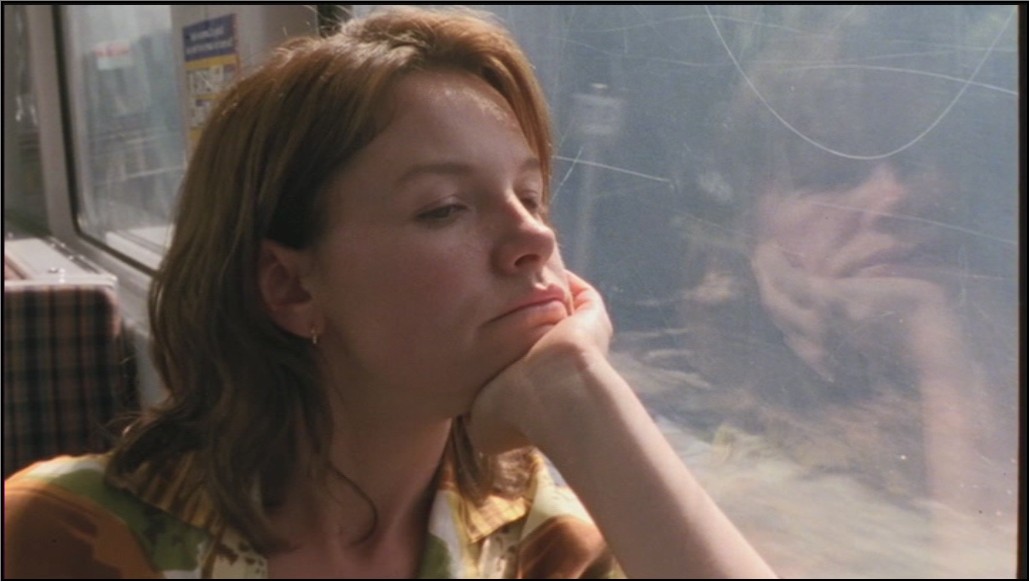
The line out to the places I was going was interesting. The ‘Outer Harbour’ line takes you past ‘Port Adelaide’ and ‘Alberton’, and a little further in the region of ‘Semaphore.’ It was the film ‘Look Both Ways’ that was on my mind. I wanted to see the locations that were used in the film.
 

In the film we see shots of Justine Clarke looking bored on the train and travelling past vast industrial wastelands. These vast industrial wastelands look worse in real life. The view along the whole of the ‘Outer Harbor’ line was depressing. It made me think that Adelaide is lovely and soft in the centre, but brittle and ugly on the outskirts- at least in the west, at any rate. I found some of the locations used for the film, and found this really interesting. I want to do the same for the film ‘The Year My Voice Broke’, filmed apparently in Braidwood, New South Wales. I wandered along Semaphore Road, Semaphore, just like William McInnes, and was surprised at how close the water and the jetty was to the main road. Semaphore Road is quite lovely- the sea end of it at least- but Port Adelaide Station, and all the other stations on this line, and the houses and empty spaces and factories and graffiti, were all ugly and dispiriting.


I took S and A to the Adelaide Zoo the next day. The zoo is much nicer than the Melbourne Zoo. It seems more compact and better designed, and more lovingly constructed in a way. A black cockatoo nibbled A’s finger, and a goat and a charming deer chewed our shirt sleeves.
 
The pandas and koalas were comatose in their expansive exhibits, and the emu was angry, the pretty pink flamingo seemed to be dancing as it rotated its extraordinarily thin legs as it nuzzled its own feathers, and the zoo was quiet and understated and it was so peaceful and easy and there was nothing ostentatious or grand and in fact the whole area around the zoo is a pretty green and there are no high risers and the walk down to the zoo from North Terrace is fresh and lovely and cool and uncomplicated and free.


We stayed on Pulteney Street, sandwiched between North Terrace and Rundle Mall. Those silly silver balls sitting on top of each other are still on Rundle Mall. The charming statues are still on North Terrace and haven’t been dwarfed by some modern ugly sculptures. Michael Treloar’s antiquarian bookshop is still going, but only just, and the food shops on Rundle Mall are still a bit tacky and cheap. The murals on the walls appear to be the same and people still walk diagonally across some of the streets and always wait for the lights. The same stuffed animals are in the museum in exactly the same pose as they were years ago. You haven’t changed much since then, but your child has become a bit older.  It’s so charming in a way. Adelaide people rarely jaywalk, and always wait for the walking green. This doesn’t happen in bad brash Melbourne much.
I felt a cold wind, a note of warning, however. It seemed like Adelaide was still determined to ‘catch up.’ There was a lot of noise going on. Saws and drills, and unsightly cranes. Some weird thing was going on around the Rundle Mall/ King William Street intersection. The lovely ‘Beehive Corner’ was half hidden. ‘Haigh’s chocolates’ was still there, but tragically obscured, and there were those annoying wind tunnels going on everywhere to protect people from falling hammers and what not on construction sites. Don’t get me started on the Festival Centre area. The Torrens River was barely visible due to the vast construction site in place. So much for ‘boats for hire.’
 
  File:Chilean Flamingo-Adelaide Zoo.jpg


Friday, September 13, 2013

SONS AND LOVERS IS A HUNDRED YEARS OLD


SONS AND LOVERS was first published in the early months of 1913. The Lawrence’s were living on Lake Garda at the time. It must have been of some relief to Lawrence. It was many years in gestation, and featured any number of drafts. Lawrence’s former fiancée, Jessie Chambers (Miriam in the novel) was a heavy, early influence. She read and commented on many of the drafts. Later she lost a lot of influence when they became estranged after Lawrence became engaged to Louie Burrows who knew Jessie Chambers, and especially diminished when Lawrence met his future wife, Frieda. Frieda helped Lawrence see his past in a much different light. Sometime later Lawrence would admit that he was under the influence of his mother too much, to the extent that his ‘memoir’ of his boyhood struggles did a disservice to his father and his father’s relationship with his family. It must have come as quite a shock to Jessie Chambers when suddenly, one day, through Louie Burrows if I remember correctly, she was told that Lawrence had eloped with a German woman (not far from the start of the first war). The Lawrence of her girlhood and his boyhood, as traced throughout Sons and Lovers, was much altered.
           Frieda and D.H. Lawrence

The first book I ever read about Lawrence was a pictorial biography written by the celebrated champion of Lawrence, Keith Sagar. It was when I was living in Wangaratta, and I visited the local newsagent in search of something new. The account of Lawrence’s family and upbringing, the closeness with his mother, the hatred of his father, the death of an older brother, the struggles with women and the frustrations of sex, the love of languages and learning and nature, the boyhood joy of going to the rural property, ‘The Haggs’ to see Jessie and her family- this was the stuff of wondrous excitement for me and it left me hungry for anything Lawrentian, which still carries to a certain extent to this day. The next logical reading excursion was ‘Sons and Lovers’, and here to my great surprise was pretty much the Sagar story retold with a protagonist called Paul Morel, and a girlfriend called Miriam. The rural property was there, the massive mother influence, and the frustrations with sex and fascination for all birds, beasts and flowers- it was all there amidst incredibly vivid, psychological writing.
      
I went to England in 1987 and stayed the night at a YMCA in Nottingham. I spent the day in Eastwood where Lawrence grew up and wandered the streets, found the various houses he lived in with his family, saw the family graves at the local cemetery, and visited the local library to see their Lawrence display, which constitutes some of the lovely homage that Eastwood pays to its most celebrated citizen. I returned again in 1993 because I couldn’t get enough of it and did much the same thing- lots of wandering along the snowy footpaths and going to the Lawrence Birthplace Museum and bypassing the tacky ‘White Peacock’ café opposite. My most recent trips were made in 2002-2003. I was living in England at the time. I packed the car, and with my wife I drove to Nottingham city centre randomly in search of a job and a house to live in. For the next 2-3 months, after settling eventually in Old Basford, I found myself within easy driving access to Nottingham University to see the Lawrence collection at the library, and what’s more, Eastwood itself, so I could make many trips to the library, the museum, the wooded areas surrounding The Haggs, the four houses the Lawrence’s lived in, and the pub that Arthur Lawrence frequented. This was real ‘Sons and Lovers’ territory and it brought the wonderful book to life. I imagined the lucky students in neighbouring counties like Leicestershire, and Derbyshire, and even Yorkshire, going to Eastwood for school excursions whilst studying ‘Sons and Lovers’, and witnessing the respectful painted trail along the small city’s footpaths that follow in Lawrence’s former footsteps.
    

Last night I finished Geoff Dyer’s enigmatic ‘Out Of Sheer Rage’, which was supposed to be a book about Lawrence, but ended up being a book about writing a book about Lawrence. Much of it is intriguing, although admittedly I skipped certain sections, my eye alert mostly to the passages about the author. It is a book that I wished I had written- the pilgrimages to the houses lived in, the fun of following the blue line trail around Eastwood, ruminating on the fabulous letters and the best books. It is a good book to read on the hundred year anniversary of Sons and Lovers. And now that I’ve finished it I’m going to go back to the book published in 1913, about a boy and then a young man visiting The Haggs farmhouse, wondrous and lit up inside.


Sunday, July 28, 2013

Three Colours White: Revenge and Obsession


                                White Poster.jpg
MOST people would say that ‘Three Colours White’ pales in comparison to ‘Blue’; that it isn’t as moving, or intense, or meaningful, or as important in some way. Well that would be to miss the point entirely. It has completely different aims, even though many of the films’ production team is the same for both. ‘White’ is a black comedy. The plot is ridiculous at times and it is very plot-driven, unlike the first film which has many moments of contemplation, in which the film seems to stand still. The two key male leads are the same, I believe, as the two leads in another Kieslowski ‘comedy’, from ‘Dekalog’- from memory it is the last or one of the last of the ten one hour films, about two brothers who inherit their father’s stamp collection with tragi-comic results. It is because of this association with the earlier film, that ‘White’ seems even more farcical to me than it possibly is supposed to. The male lead, in particular, has an amusing face, and is very hard to take seriously. Kieslowski uses him, in both films, as someone the audience can pity and laugh at, as much as if to say ‘I’m glad it’s happening to him, and not to me!’
 

The female lead is Julie Delpy (Dominique) who auditioned for ‘The Double Life of Veronique’ but would have been terrible, and rejected, mercifully, the offer to play Julie in ‘Blue.’ In ‘White’ she is good. A bit like a cat, she is cruel, and sneaky, and cunning, but, when trapped at the end, we witness her human side and find her more likeable as a result.
 

Zbigniew Zamachowski’s character (Karol) is signposted as tragic and ridiculous from the very start. He is visiting the law courts to find out that his wife, Dominique, wants a divorce because he is inept in the bedroom. As he is ascending the steps, he looks at a pigeon in the sky. Suddenly there is a splash of white on his coat, from the pigeon, just as he is admiring its flight. This is the first sign of his helplessness. This is Kieslowski marking him as a ridiculous figure who seems destined for bad luck. He has that sense of resignation all over his face. Soon enough, Karol is seen pathetically running after Dominique as she speeds off in their car, lugging a heavy suitcase after him, calling her name. This is after she has coldly and brazenly told him publically that she doesn’t love him anymore.  Here he is having his only credit card cut into pieces by the bank (her money it seems); and freezing to death sitting on his suitcase to see how his life will unfold; being shown as an abject failure again by failing another consummation test with his wife, and being threatened with arson; playing his comb as a musical instrument as a busker on the Metro and being told his ‘fly’ is open. It is here, at the Metro, however, that Karol meets Mikolaj, a fellow Pole from Warsaw, whose friendship will give him a spark and change his life forever. Before this, however, Kieslowski’s anti-hero makes a triumphant escape on a flight to Warsaw in a suitcase, only to be a victim of corrupt baggage handlers who, judging by the weight of the suitcase, think they have discovered gold. We are shown another scene in which Karol is lugging his suitcase in the freezing cold, weary, beaten and bloodied, this time to his former hairdressing salon shop he co-owned with Dominique before things turned sour. The little shop is amusingly lit up with ‘KAROL’ on a red neon sign.
 
Well Karol proves to be made of much sterner stuff than either his ex-wife or the audience give him credit for. He is able to scheme and hoodwink just as well as any other Polish businessman, and make a lot of money out of property scams, and being able to offer his loyal friend, Mikolaj, a partnership in a company. His main objective is to seek out revenge on his callous ex-wife. All overtures to reconcile with her have been fruitless as she treats him like trash. By faking his own death, getting her to attend his funeral, and using a substitute body for the coffin, Karol is able enact a brilliant scheme that will see Dominique go to jail. A moment of epiphany occurs, however, as he witnesses her real tears at his mock funeral, and sees evidence of the love that was once shared.

Perhaps the most enjoyable scene from the entire film is the shock on Dominique’s face as she returns to her Parisian flat after the funeral, to find Karol, shirtless, in her bed. They make passionate love for the first time and suddenly it seems a cloud has lifted over the fickle Dominique and she is in love with him. It’s all too late for her. The police arrive and arrest her for complicit involvement in Karol’s ‘death.’ The film ends with Karol seeing Dominique through the bars of her prison. She seems, in her sign language, to be suggesting future plans for being together. He stands there, weeping, perhaps wondering if it can ever be.
             Still from Three Colours White

It is difficult to have a colour like white, thematically, to dominate a film, unlike the tones of red and blue that are so striking in the other films. Kieslowski, however, finds ways. He creates a snowy landscape in various parts of the film, especially scenes set in his home city of Warsaw. As in ‘Dekalog’, his intimate feel for Poland is evident in the way he makes his film, however it is always a totally unsentimental approach. Kieslowski also uses a dominance of white in a montage that is repeated throughout. It is a view of Karol and Dominique’s wedding day. She is beautiful in her white dress and the background sky is of a cold, milky white. There is also a lovely scene in the pure white snow in which Karol and Mikolaj are celebrating their unusual friendship by rolling around on the ground, again under a white winter sky.
                              

‘Three Colours White’ is probably not as dense as ‘Blue’ but its exploration of friendship and loyalty on the one hand, and mistrust and vengeance on the other, make it intriguing. Filming parts of ‘Blue’ at the same time as filming ‘White’, and even editing ‘Red’ at the same time, and maintaining ridiculous brief sleeping patterns over a long period of time, is no mean feat. Juliette Binoche even wanders onto the ‘White’ film set at the start of the film as if to suggest she is looking everywhere for her director in order to cut another scene- for the film that she stars in.
      white

Tuesday, July 16, 2013

Three Colours Blue: introspection and liberation


Having watched a whole range of Kryzsztof Kieslowski’s Polish films over the past year, I have now revisited his famous Three Colours Trilogy. The three films- Blue, White and Red, were all filmed within a tight time frame and edited at the same time. I think it was the director’s first foray into French film making, and he died shortly after the release of the third of the trilogy, ‘Three Colours Red.’


There are a number of memorable moments in the first film, ‘Three Colours Blue’, which has Juliette Binoche (as Julie) in many of the frames. I remembered, from seeing the film twenty years ago, the shots of Julie swimming in the pool, enveloped by beautiful blue water, a blue bathing suit, and each sequence seeming to become a deeper blue, as though it is all filmed through the prism of a blue lens. Julie is grieving, after the road accident that killed her famous husband and her child, and she is curled up in the water like a foetus, her hands cupping her ears, trying to absorb everything that has happened, or perhaps block it out.
          

The film uses the colour blue as a repeated motif, just as the other two films will (sometimes) use white and red. Another strong image is of a glassy blue mobile that Julie is enamoured with. Julie stands beside and behind the crystals, and a glorious blue light splashes over her whole face as she examines the mobile for some deeper meaning. We all need to hang on to something from our treasured past.
            

Julie is told by her doctor at the start of the film that her husband and daughter are both dead. She is lying prostrate on a hospital bed. We know the doctor is talking to her because we can hear his voice. The only vision of him, however, is reflected through one of her eyeballs. It is a classic Kieslowski shot- difficult to capture- an intense close up of Julie’s eye is needed- and it emphasises the tragic elements that are in the doctor’s words.

The colour blue creeps into even the unlikeliest of scenes. Julie comes home to find a large mouse in her kitchen, hovering over several just born blind and hairless babies. The image, in close up, is startling and alien, and yet there is that soft suffused spot of blue light in the background.

It is the detail and the intellect that makes watching these films closely, rewarding. The introspective side of Julie is shown when she watches herself reflected in a spoon that is dangling on top of a glass vase. Moments later, in a Parisian café, she seems to be avoiding the attentions of a family friend who loves her, and has tracked her down after several months of searching. Instead of regarding him, she is more intent on studying the way in which coffee slowly absorbs an entire sugar cube, grain by grain. Julie is not ready to deal with anything that is not abstract.
 

At the end of the film we know there is a release, or liberation, for her, as she makes love with this same man. We seem them through a grainy window, the faces pressed against glass, almost like they are in an aquarium, and there is no intellect, nothing cerebral, just pleasure and release. The final shot features a close up of Julie’s face, a hazy blue glow enveloping her, tears running freely down her soft face. She is dealing with her grief. There is a noticeable smile seconds before the final fade. It is vague, and not emphatic in any way, but it is definitely there, and means everything.